
When to Ease Off Dog Walks – and When to Stop Completely
A practical guide to adjusting or ending walks based on age, breed, health, lifetime mileage and climate
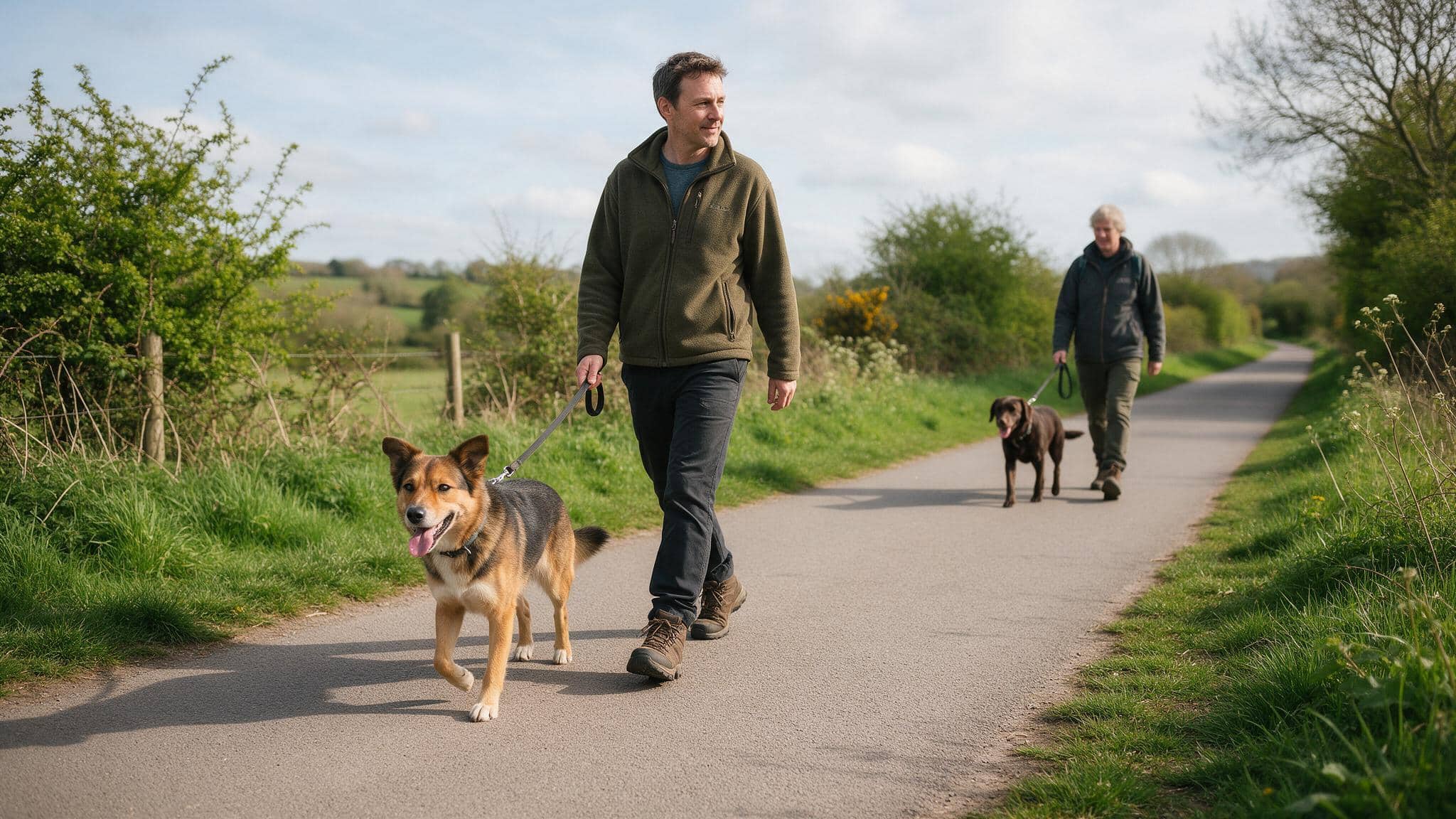
Every dog’s walking life has a natural arc. For most of their years the daily walk is non-negotiable – good for body, mind and the bond you share. But there comes a point when the same routes, distances and pace that once felt easy start to cost more than they give.
Knowing when to ease off, and eventually when to stop formal walks altogether, is one of the kinder decisions an owner can make. It is rarely a single dramatic moment. More often it is a gradual shift driven by age, breed, previous mileage, current health and the climate you live in.
This guide looks at the practical signs and the main factors that influence the decision so you can adjust with confidence rather than guilt.
Age is the biggest single factor
Most dogs begin to show clear changes in their walking capacity somewhere between eight and twelve years old, though this varies widely. Large and giant breeds often slow down earlier; many small breeds stay mobile well into their teens. The key is not the number on the birthday chart but how the dog actually moves and recovers. Stiffness first thing in the morning that takes longer to wear off, reluctance to jump into the car, or a noticeable drop in enthusiasm for the usual route are early signals that the current walking routine needs reviewing.
Breed and body size change the timeline
A working collie or spaniel that has covered thousands of miles in its prime will often keep going longer than a heavy-set breed with the same calendar age. Conversely, deep-chested or very large dogs may develop joint or heart limitations earlier even if they have not been especially active. Brachycephalic breeds (flat-faced dogs) frequently struggle sooner in warm weather because of their breathing anatomy. Knowing your dog’s breed tendencies helps you anticipate rather than react.
Lifetime mileage and cumulative wear
Dogs that have spent years doing long daily walks, hill work or intense sports carry more cumulative stress in joints, ligaments and soft tissues. A dog that has averaged ten miles a day for a decade may need to scale back earlier than a dog of the same age that has mostly done short neighbourhood strolls. High lifetime mileage is not a bad thing – it usually means a fit, well-muscled body – but it does mean the “maintenance” phase arrives sooner.
Illness and chronic conditions force earlier changes
Arthritis, heart disease, respiratory problems, neurological issues and recovery from surgery all shorten the comfortable walking window. Even mild chronic pain that the dog has adapted to can tip into genuine discomfort once distances stay the same. If a dog is on long-term medication for joints or heart, the walking plan should be reviewed with the vet at every check-up. Some conditions allow continued short, flat, slow walks; others make any formal outing counterproductive.
Climate dramatically alters the safe window
In very hot regions the decision to shorten or stop walks often arrives years earlier. Pavement temperatures, humidity and the risk of heatstroke mean many dogs can only manage early-morning or late-evening outings, and even those become risky as they age. In extreme cold the opposite problem appears: older dogs lose body heat faster, joints stiffen more, and icy surfaces raise the chance of slips and falls. Temperate climates give the longest walking seasons. Dogs living in mild conditions can usually keep gentle walks going further into old age simply because the environment itself is less punishing.
Practical signs it is time to ease down
Watch for these consistent patterns rather than one-off off days: the dog lags behind on familiar routes, pants heavily on gentle slopes, seeks shade or sits down mid-walk, takes hours or overnight to recover normal energy, shows stiffness that lasts into the next day, or simply stops greeting the lead with enthusiasm. When two or three of these appear regularly, reduce distance first, then pace, then frequency. Replace one longer walk with two or three short ones. Keep surfaces soft and routes flat.
- Lags behind on usual routes
Heavy panting on gentle ground
Seeks shade or sits mid-walk
Long recovery time afterwards
Stiffness lasting into next day
Loss of enthusiasm for the lead
When it is kinder to stop formal walks
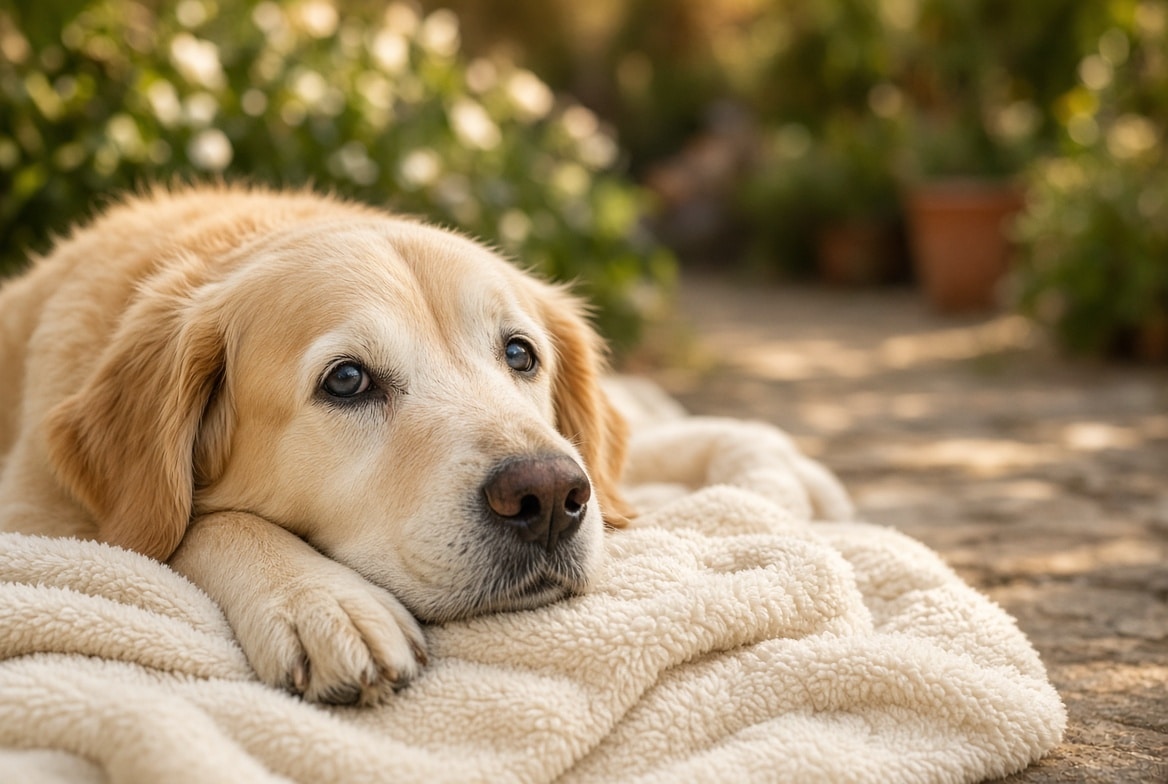
There is a point where even short, slow outings create more stress than benefit. Indicators include inability to walk more than a few minutes without pain or extreme fatigue, repeated stumbling or disorientation, distress when the lead appears, or medical advice that exercise should be limited to toileting only. At this stage the goal shifts to comfort: short garden or yard time, indoor sniffing games, gentle massage, and maintaining muscle with passive movement if the vet approves. Stopping the traditional walk is not giving up; it is recognising that the dog’s needs have changed.
How to make the transition without guilt
Many owners feel they are failing their dog when walks get shorter or stop. In reality the opposite is true. A dog that is forced to keep covering the old distances when its body can no longer cope pays in pain and anxiety. Gradual reduction, swapped for other forms of enrichment, keeps the relationship strong. Continue the daily routine of going outside together even if the “walk” is now a slow potter around the garden. The ritual still matters.