
Walking Multiple Dogs at Once – Keeping the Group Calm and Safe
Practical strategies for managing two or more dogs without chaos or tension
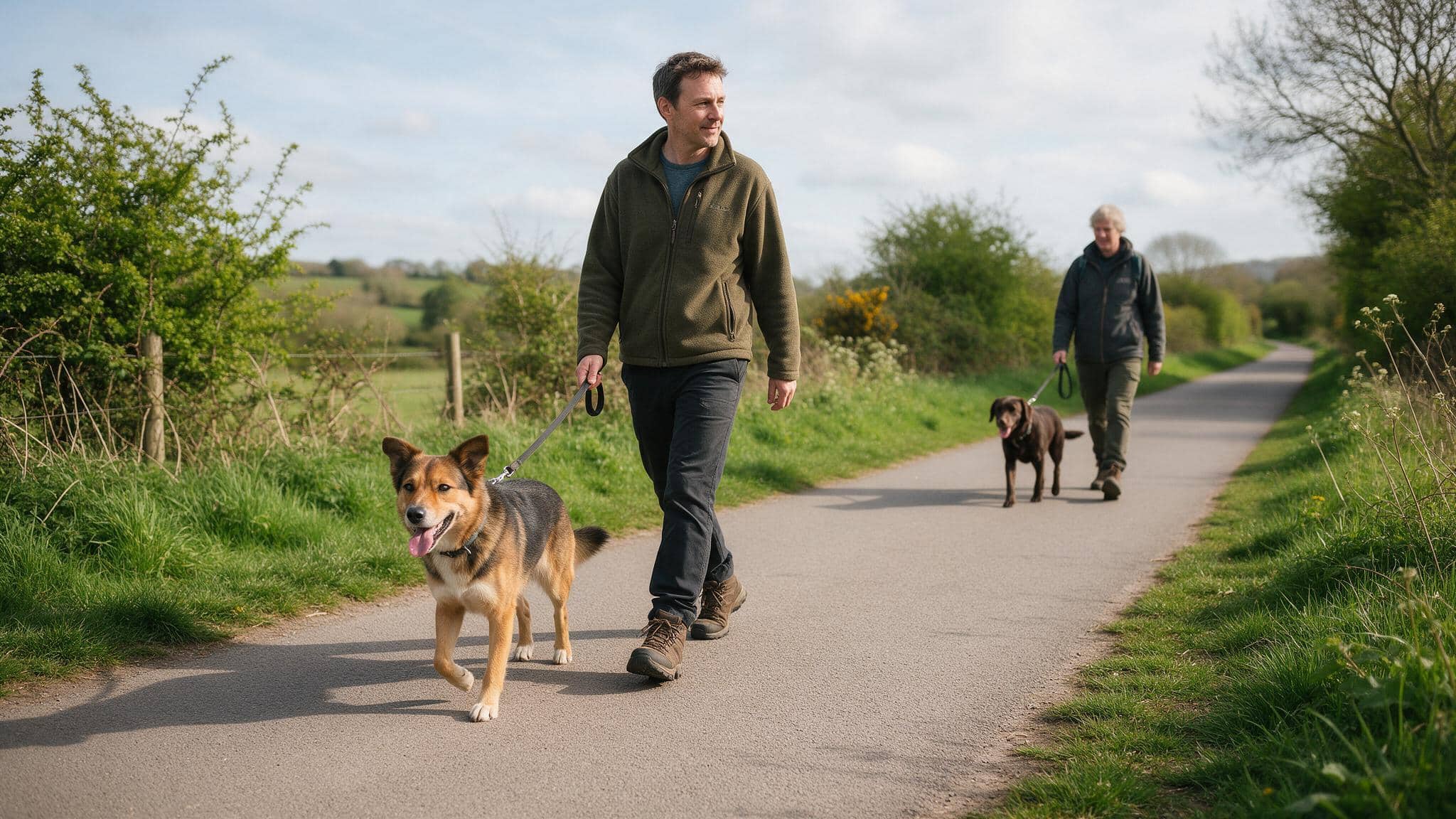
Walking one dog is straightforward. Walking two or more at the same time multiplies the variables – different energy levels, recall reliability, reactivity triggers and lead skills. Done well, multi-dog walks can be efficient and enjoyable. Done poorly, they quickly become stressful for everyone. This guide focuses on the practical decisions that keep a group of dogs calm, safe and under control.
Matching energy and temperament
The biggest mistake when walking multiple dogs is treating them as a single unit. A high-drive working breed and a slower, older companion will pull the group in different directions. Pair dogs with similar pace and arousal levels where possible. If one dog is significantly more reactive or excited, that dog may need to walk at the back or on a shorter lead so it cannot set the emotional tone for the others.
Lead set-up and spacing
Two dogs on short leads held in one hand quickly becomes messy. A common workable approach is one lead per hand, or a well-designed coupler only when both dogs are steady. Keep enough space between the dogs so they cannot easily tangle or redirect frustration onto each other. If one dog lunges, the others should not be dragged into the same tight space. For more on managing individual reactivity within a group, see our guide on Walking a Reactive Dog.
Start with short, low-distraction routes
Multi-dog walks are harder in busy parks or narrow paths. Begin with quiet routes that have good visibility and space to move aside. Practice calm standing still and simple changes of direction before attempting longer or more stimulating walks. Success on easy ground builds the habits you will need when the environment gets harder.
Watch for rising tension between the dogs
Growling, hard stares, or sudden stiff body language between the dogs on the lead is a signal to increase distance or end the walk early. Do not wait for an actual scrap. Separating the dogs for a few minutes or finishing the outing is better than pushing through and risking a fight.
Knowing when to split the walks
Some combinations of dogs will never settle into a relaxed group walk. In those cases it is kinder and safer to walk them in smaller sets or separately. Efficiency matters, but not at the cost of repeated stress or near-misses. Many owners find a mix of joint and separate walks gives the best balance.