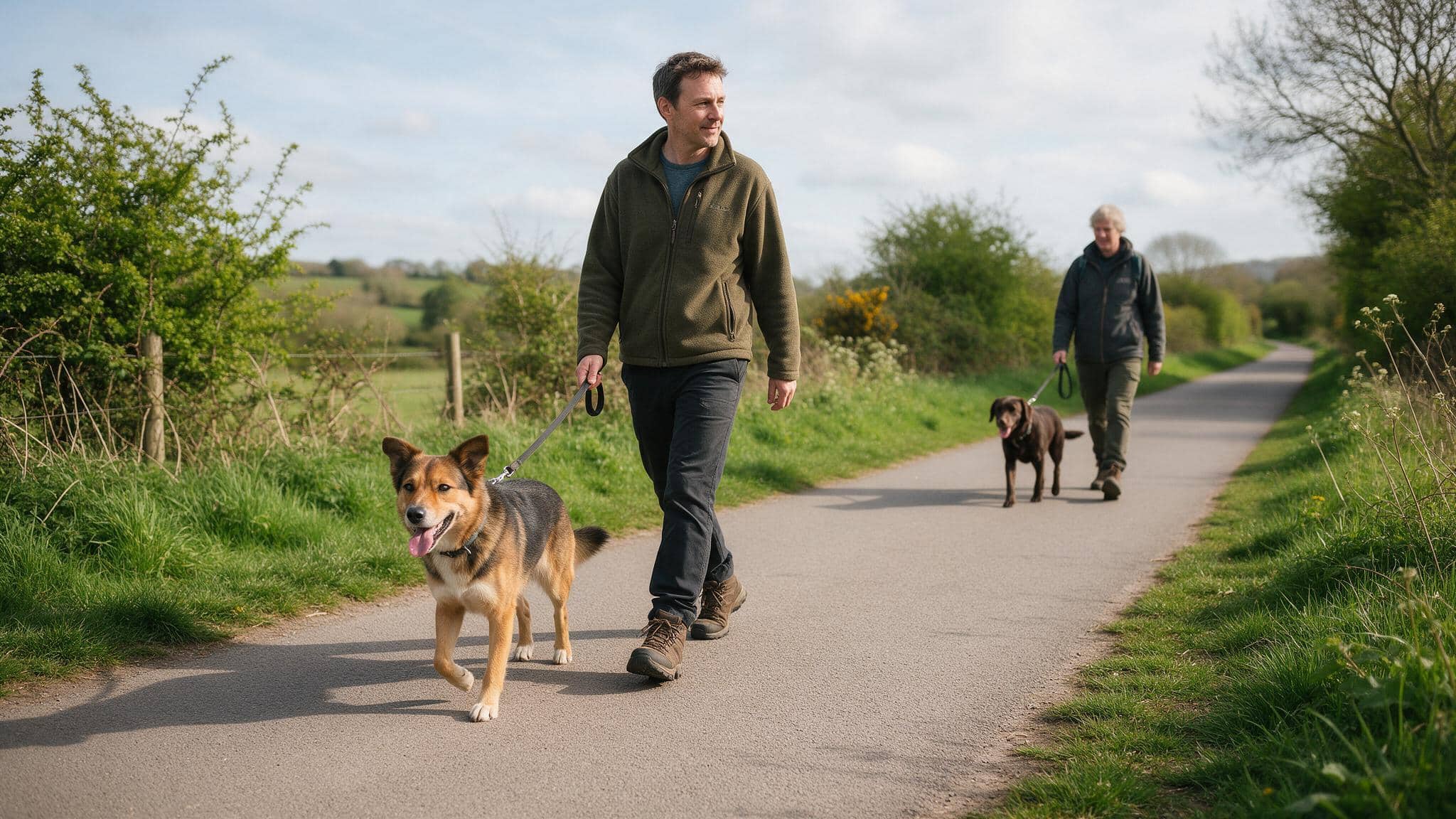


Walking Dogs on Varied Terrain for Better Fitness
Why changing surfaces and gradients helps body and mind
Flat pavement every day is functional but limited. Dogs that regularly walk on grass, woodland paths, gentle slopes, soft sand or uneven ground develop better balance, stronger stabilising muscles and more mental engagement. Varied terrain is one of the simplest ways to make walks more physically and mentally beneficial without adding distance.
Why flat pavement is limited
Pavement is convenient but repetitive. It works the same muscles in the same way every day. Dogs benefit from having to adjust their balance, stride length and foot placement on different surfaces.
Soft surfaces build stability
Grass, woodland paths and sand require constant small adjustments. These surfaces strengthen the smaller stabilising muscles around joints and improve proprioception – the dog’s awareness of where its body is in space.
Gentle slopes and gradients
Inclines and declines work different muscle groups and improve cardiovascular fitness without the need for speed. Even a short hill incorporated into a regular route adds meaningful variety.
Uneven ground for coordination
Roots, mild rocks and undulating paths encourage the dog to look where it is placing its feet. This is particularly valuable for young dogs still developing body awareness and for older dogs maintaining mobility.
Mental benefits of new terrain
New smells, changing underfoot feel and different views keep the dog engaged. A walk that includes variety often leaves the dog more satisfied even if the total distance is shorter.
How to introduce new surfaces safely
Start with short periods on the new terrain. Watch for fatigue or uncertainty. Some dogs need time to gain confidence on softer or more uneven ground. Never force a dog across something it finds genuinely frightening.
Matching terrain to the individual dog
Puppies and seniors need gentler introductions. Dogs with joint issues may prefer softer ground. High-energy dogs often benefit from the extra physical challenge of varied routes.
Practical route planning
Many everyday walks can include a short section of grass, a path through trees, or a gentle slope without needing a special trip. Rotating a few different local routes prevents both physical and mental staleness.