

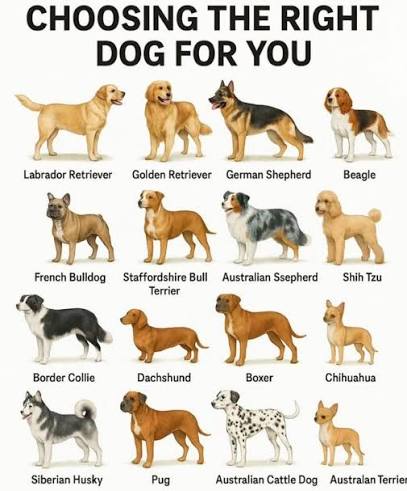
Choosing the Right Family Dog: The Good, the Tricky, and the Absolutely Not
Bringing a dog into a family home is one of the most rewarding decisions you can make — but breed choice matters enormously, especially when children are involved. The right dog becomes a loyal companion, a playmate, and a beloved family member. The wrong one can create years of stress and even safety concerns. Here is a practical guide to help you navigate the landscape.
Top 5 Family-Friendly Breeds
Labrador Retriever
Consistently ranked as one of the most popular family dogs in the world, and for good reason. Labradors are gentle, eager to please, and incredibly patient with children. They have boundless energy for games of fetch but are equally happy flopping on the living room floor. Their trainability makes them suitable for first-time owners, and their sociable nature means they generally get along well with other pets and visitors.
Golden Retriever
The Golden shares many of the Labrador's best qualities but tends to be slightly softer and more sensitive in temperament. They are famously affectionate, reliable with children, and respond beautifully to positive reinforcement training. Their calm demeanour and willingness to bond with every family member make them a perennial favourite.
Beagle
Small enough to manage in most homes but sturdy enough for rough-and-tumble play, Beagles are cheerful, curious, and remarkably tolerant. Bred to work in packs, they are naturally sociable and rarely aggressive. Their moderate size and short coat make them relatively low-maintenance, though their nose can lead them astray if off the lead in unsecured areas.
Cavalier King Charles Spaniel
If space is limited, the Cavalier is an outstanding choice. These small dogs are affectionate, gentle, and adaptable — happy with a short walk or a long afternoon on the sofa. They bond closely with their families and are known for being exceptionally good with young children, provided interactions are supervised as with any breed.
Boxer
Beneath their muscular appearance, Boxers are affectionate, playful, and fiercely loyal. They have a natural affinity for children and seem to understand the need to be gentle with smaller family members. Their high energy levels make them ideal for active families who enjoy long walks and outdoor adventures.
4 Breeds That Can Be Challenging
Siberian Husky
Stunning to look at but demanding to live with. Huskies are intelligent escape artists with enormous exercise requirements. They are notorious diggers and howlers, and their strong prey drive can be problematic around small pets. They need an experienced, committed owner.
Border Collie
Arguably the most intelligent breed, which is precisely the problem. Without sufficient mental and physical stimulation, Border Collies develop obsessive behaviours, anxiety, and destructiveness. They are working dogs through and through, not suited to a sedentary family lifestyle.
Jack Russell Terrier
Small but fierce. Jack Russells were bred to hunt and retain a strong prey drive and boundless energy. They can be snappy if poorly socialised and are often too intense for households with very young children.
Dalmatian
Energetic, sensitive, and prone to deafness, Dalmatians require consistent training and significant exercise. Their stubborn streak means they are better suited to experienced owners who understand the breed's specific needs.
3–4 Breeds You Should Absolutely Not Get for a Family
Akita
Powerful, independent, and naturally protective to the point of aggression. Akitas have a strong guarding instinct and can be unpredictable around children, particularly those outside their immediate family. They require expert handling and are not appropriate for the average household.
Presa Canario
Originally bred for guarding and fighting, the Presa Canario is a large, dominant breed with a powerful bite. Their size and temperament make them genuinely unsuitable for families, and ownership is restricted or banned in several countries.
Tosa Inu
Another breed with fighting origins, the Japanese Tosa is calm in demeanour but possesses enormous strength and a strong guarding instinct. Ownership is illegal in several countries, including the UK, and they are entirely inappropriate for family life.
Wolf Hybrids
Part dog, part wolf — and the wolf side is not a cosmetic detail. Wolf hybrids retain wild instincts, are extremely difficult to train, and their behaviour can be unpredictable and dangerous. They are not domesticated animals in any meaningful sense and should never be kept as family pets.
Final Thoughts
Every individual dog has its own personality, and responsible breeding, socialisation, and training matter enormously regardless of breed. However, starting with a breed whose temperament naturally aligns with family life gives you an enormous head start. Choose wisely, commit fully, and the reward is a friendship that shapes your children's fondest memories for years to come.